Top AI Breakthroughs In The Food Industry

This page explains how AI tools like sensors, robotics, and computer vision are used across farming, factories, and stores to cut waste, forecast demand, and improve food safety. Real examples show faster production, lower costs, and better accuracy. Readers can use this to understand AI's impact on the food industry.
Top AI Breakthroughs in the Food Industry span machine learning, predictive analytics, artificial neural nets, computer vision, robotics, drones and generative AI, applied from farm to retail; the global market was projected to exceed USD 9.68 billion by throughput.world journeyfoods.io munchem.com startus-insights.com.
- The global AI market for food and beverages was projected to exceed USD 9.68 billion by and reach USD 48.99 billion by throughput.world.
- Nearly 60% of US food and beverage manufacturers use IoT and smart sensors for real‑time tracking startus-insights.com.
- Church Brothers Farms improved short‑term forecasting accuracy by 40% after working with Throughput.ai throughput.world.
- Nutreco reported 30% less feed and doubled shrimp production using audio sensors and machine learning instrumentation.co.za.
Which AI technologies count as major breakthroughs in the food industry, and how are they used from farming through retail? — Top AI Breakthroughs in the Food Industry
Food‑industry AI is defined as machine learning, predictive analytics, and real‑time data processing used to optimise production, supply‑chain, and retail operations throughput.world.
Top AI Breakthroughs in the Food Industry have a commercial scale as well: the global market was projected to exceed USD 9.68 billion by throughput.world.
Top AI Breakthroughs in the Food Industry appear on the supply chain too: food companies use artificial‑neural‑network algorithms to monitor shipments for safety, inventory management and transparency journeyfoods.io.
On the factory floor, AI can sort food efficiently and accurately, removing the need for manual sorting on assembly lines journeyfoods.io, and AI‑powered machines are used to sort and package food to reduce waste eatos.com.
On the farm, you can analyse drone, sensor and satellite data to reduce field‑trial time and spot pests or disease early, and machine learning can optimise irrigation and fertiliser use from soil and weather data throughput.world eatos.com.
Nearly 60% of US food and beverage manufacturers already use IoT and smart sensors for real‑time tracking, so the sensor layer is well established in many operations startus-insights.com.

How do computer vision, predictive analytics, robotics, and generative AI compare in food production and product development?
Computer vision, predictive analytics, robotics and generative AI each play distinct roles across production and product development; generative AI is defined as a subset of deep learning that produces new content from input descriptions munchem.com.
Top AI Breakthroughs in the Food Industry show up in personalised nutrition: generative AI can analyse dietary restrictions, health data and metabolism to recommend personalised plans munchem.com.
Top AI Breakthroughs in the Food Industry also include materials science and formulation work: Beyond Meat uses machine learning to analyse plant proteins and ingredient profiles to replicate animal meat characteristics throughput.world.
In production, deep learning analyses images and video to detect defects or contaminants on lines, and commercial kitchen operators use computer vision to track food waste in real time munchem.comstartus-insights.com.
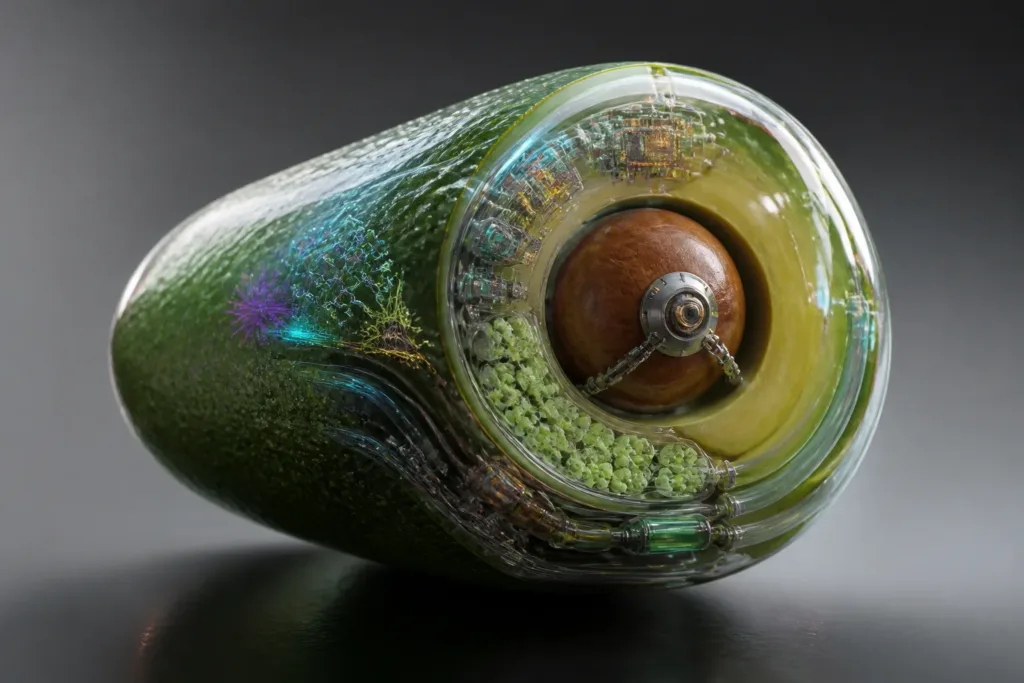
Robotics automates repetitive or high‑volume tasks — for example, Chipotle’s Autocado robotic system cuts, cores and peels an avocado in seconds startus-insights.com.
For product development, large simulation searches and recipe combinatorics accelerate ideation: Unilever runs computer simulations to test millions of recipe combinations in seconds, and Schrödinger’s system predicts ingredient instability before bench work linkedin.comlinkedin.com.
What measurable improvements in yield, throughput, waste, food safety, or demand forecasting have food businesses achieved with AI?
Measured business outcomes from AI include forecasting, inventory and time‑to‑market gains; Church Brothers Farms improved short‑term forecasting accuracy by 40% after working with Throughput.ai throughput.world.
Top AI Breakthroughs in the Food Industry manifest in operations: a coffee chain working with Throughput lowered inventory by 15% and raised labour productivity by 5% throughput.world.
Top AI Breakthroughs in the Food Industry also improve safety and contamination detection: AI‑enabled cameras can flag workers missing food‑protection gear and speed the detection of contamination through real‑time tracking throughput.world.
Predictive maintenance tied to AI can cut unplanned outages by roughly 20–40%, and approximately 40% of food and beverage companies use AI to reduce waste in their operations throughput.worldstartus-insights.com.
In aquaculture, Nutreco used audio sensors with machine learning to reduce feed by about 30% while doubling shrimp production without major intensification, according to the report instrumentation.co.za.
On product workflows, Zeelandia cut recommendation preparation from minutes to five minutes, and Nestlé reduced development time from three months to three weeks while producing 1,300 products with its generator instrumentation.co.za linkedin.com.

What data, sensors, equipment, and software integrations are needed to deploy AI in a food or beverage operation?
Data inputs and integrations begin with field sensors and scale to enterprise platforms: farmers can analyse drone, sensor and satellite data to reduce field‑trial time and inspection costs throughput.world.
Top AI Breakthroughs in the Food Industry rely on soil sensors, satellite imagery and deep‑learning models to support data‑driven decisions at the plot level munchem.com.
Top AI Breakthroughs in the Food Industry require industry data readiness, scalable AI platforms, pilot programmes with measurable KPIs, and internal training to succeed, according to implementation guidance throughput.world.
Nearly 60% of US food and beverage manufacturers use IoT and smart sensors for real‑time tracking, so you should expect a sensor network to be part of many deployments startus-insights.com.
Practically, APIs let teams tap larger platforms and specialised software such as Trace One Copilot embeds into PLM and compliance systems for R&D, packaging, quality and regulatory workflows fcc-fac.calinkedin.com.
Specialised platforms combine geographic, environmental and personnel‑schedule data to analyse contamination sources, and successful rollouts need internal super‑users who understand both tools and food innovation startus-insights.comlinkedin.com.

What are the typical costs and payback periods for AI solutions in food manufacturing, agriculture, and supply‑chain management?
Payback and timing vary by scope, but most organisations report measurable results from AI‑driven optimisation within 8–12 weeks of deployment throughput.world.
Top AI Breakthroughs in the Food Industry carry a caveat: tools built for large datasets are costly to customise for organisations that lack data, which raises implementation expense for data‑poor businesses throughput.world.
Top AI Breakthroughs in the Food Industry also come with high upfront investment — equipment, software and infrastructure — plus ongoing maintenance and upgrade costs that buyers should budget for linkedin.com.
As you evaluate vendors, factor pilot KPIs and realistic timelines into total cost of ownership because ledger sources emphasise measurable pilots and internal training to realise payback throughput.world.

What food‑safety, privacy, cybersecurity, and regulatory risks should businesses assess before adopting AI?
Data security and privacy risk are primary concerns when you collect customer and operational datasets; the ledger flags data breaches and unauthorised access as clear risks throughput.world.
Top AI Breakthroughs in the Food Industry must be paired with data‑quality work and privacy‑preserving techniques to avoid exposing sensitive operational or personal information linkedin.com.p>
Top AI Breakthroughs in the Food Industry can also be protective: AI‑powered sensors monitor temperatures through the cold chain and alert producers or distributors to potential problems eatos.com.p>
Data governance, integration and quality are repeatedly cited as the main hurdles to adoption, and private deployments with audit trails are offered as guardrails by some vendors linkedin.com.
Which AI vendors serve the food industry, and what criteria can buyers use to compare their solutions?
The Just Food Buyers Guide lists leading vendors for food AI including AVEVA, Black Swan Data, Blue Yonder, C3.ai, Dorabot, Eversight, Futurmaster, HelloAva, ImpactVision and Journey Foods journeyfoods.io.
Top AI Breakthroughs in the Food Industry include hardware‑agnostic pathogen detection platforms such as HyperSpectral’s spectroscopy system that tests multiple contaminants in real time startus-insights.com.p>
Top AI Breakthroughs in the Food Industry also include embedded PLM assistants like Trace One Copilot that integrate R&D, quality and regulatory teams into product‑lifecycle workflows linkedin.com.p>
Buyers should prefer transparent, reproducible recommendation engines and vendor roadmaps that align to high‑cost or high‑risk parts of the business; Halo matches capabilities with innovation needs and emphasises reproducible recommendations linkedin.com fcc-fac.ca.
Industry expectations are high: an A3 survey found more than 76% of respondents expected AI to be important to their companies within three years, though only 3.3% reported it was widely applied at the time of that survey foodengineeringmag.com.
| Organization | Process | Reported time change |
|---|---|---|
| Nestlé linkedin.com | product development linkedin.com | reduced product development time from three months to three weeks linkedin.com |
| Zeelandia instrumentation.co.za | prepare product recommendations instrumentation.co.za | cut the time to prepare product recommendations from minutes to five minutes instrumentation.co.za |
| Alianza Team linkedin.com | trial-and-error iteration linkedin.com | can reduce trial-and-error iteration from weeks to days or hours linkedin.com |
| Source and date | Reported market value | Projection |
|---|---|---|
| foodengineeringmag.com, 2021-03 foodengineeringmag.com | US$3.07 billion in foodengineeringmag.com | expected to reach US$29.94 billion by 2026, at a forecast CAGR above 45.77% foodengineeringmag.com |
| linkedin.com, 2025-08 linkedin.com | US$8.45 billion in linkedin.com | projected to reach US$84.75 billion by 2030, at a 39.1% CAGR linkedin.com |
| throughput.world, 2024-03 throughput.world | — | projected to exceed USD 9.68 billion by and reach USD 48.99 billion by throughput.world |
| Technology | Typical uses and ledger examples |
|---|---|
| Computer vision | Detect defects and track food waste in production and kitchens munchem.comstartus-insights.com |
| Predictive analytics | Optimise supply chains, forecast demand and schedule maintenance to reduce outages munchem.comthroughput.world |
| Robotics | Automate repetitive processing tasks at speed (example: Autocado cuts, cores and peels avocados in seconds) startus-insights.com |
| Generative AI | Generate recipe or nutrition content and personalise dietary plans from user data munchem.com |
Key Takeaways
- Prioritise machine learning and predictive analytics as foundational technologies because the sector definition centres on those capabilities throughput.world.
- Plan pilots with measurable KPIs: many organisations see measurable results within 8–12 weeks of deployment throughput.world.
- Expect significant upfront costs and potential customization needs if your organisation lacks large datasets linkedin.comthroughput.world.
Frequently Asked Questions
How is AI being used in the beverage industry?
In the beverage industry you see AI across processing, quality control, cost optimisation, supply‑chain management and employee training, according to an industry summary of available solutions fcc-fac.ca.
What are the latest advancements in food technology?
Recent practical advances in food tech include machine‑learning systems that predict spoilage from sensory data and robotics that automate repetitive kitchen or processing tasks startus-insights.comeatos.com.
What are the new innovations in AI?
New AI innovations described in the ledger include generative AI that produces content from input prompts, drones and satellite analytics for field monitoring, and AI spectroscopy for pathogen detection munchem.comthroughput.worldstartus-insights.com.
What are the main types of AI?
The ledger does not provide a canonical list called “the main types of AI”, so no authoritative seven‑item list is available from these sources.
Sources
- How AI Helps in the Food Industry? (2024-03-28)
- Feature: Best in AI in Food by Just Food Buyers Guide | Journey Foods Blog (2023-01-11)
- Top Ways AI is Revolutionizing the Food Industry
- Top Food Technology Trends in 2026 (2026-01-04)
- How far can ML and AI go in food & beverage? – November 2023
- AI in Food Industry: Latest Tech Advancements – eatOS (2023-11-17)
- How Artificial Intelligence is Transforming the Food Industry (2025-08-28)
- How AI Is Accelerating Innovation Across the Food System (2026-02-27)
- How food and beverage manufacturers can explore AI
- Artificial Intelligence: It’s all about the Data | 2021-03-09 (2021-03-09)